



-100x100w.jpg)
-100x100h.jpg)



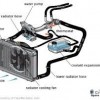
The thermostat in a car's engine regulates the temperature of the engine by controlling the flow of coolant through the engine and radiator:
When the engine is cold the thermostat remains closed, allowing the engine to warm up quickly. This helps conserve energy and reduces wear and tear. When the engine reaches the desired temperature the thermostat opens, allowing hot coolant to pass through the radiator to cool down. The coolant then returns to the engine to maintain a constant, optimal temperature.
The ideal temperature for a car's engine is typically around 90–104°C (195–220°F). This temperature is optimal for engine efficiency, combustion, and overall performance.
If your car overheats soon after starting it, or the dashboard's temperature gauge goes below normal, you should get your thermostat replaced.
You can test if your thermostat is working by filling a pot with cold water, inserting a thermometer, adding the thermostat, and placing the pot on the stove. If the thermostat opens when the temperature reaches the recorded number, it's working. If it doesn't open, or only opens at higher temperatures, it's faulty and needs replacing.
A small word about degrees :
Older toyota's were advised to use in the summer 88 degrees and in the winter 82 degrees thermostats.
Nowadays thermostats in newer engines are opening at 82 degrees , and are fully open at 95 degrees. They regulate the engine temperature much better than thermostats in older engines.
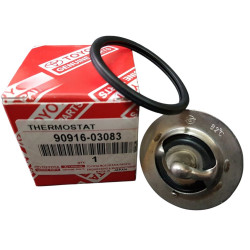
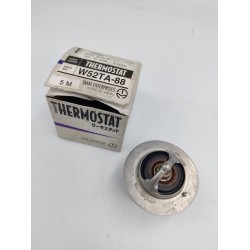
-250x250w.jpeg "Genuine original thermostat, M-engines, Crown, Carina, Corolla, Hilux")